Designing Work for Employee Wellbeing
I have come across many team members ignoring the pop-up notifications from their wellness provider. So yes, organizations need measurable behavior change for better organizational performance. As a business owner myself, I value companies' investment, and this reflects our core value: your wellbeing investment must be worth it.
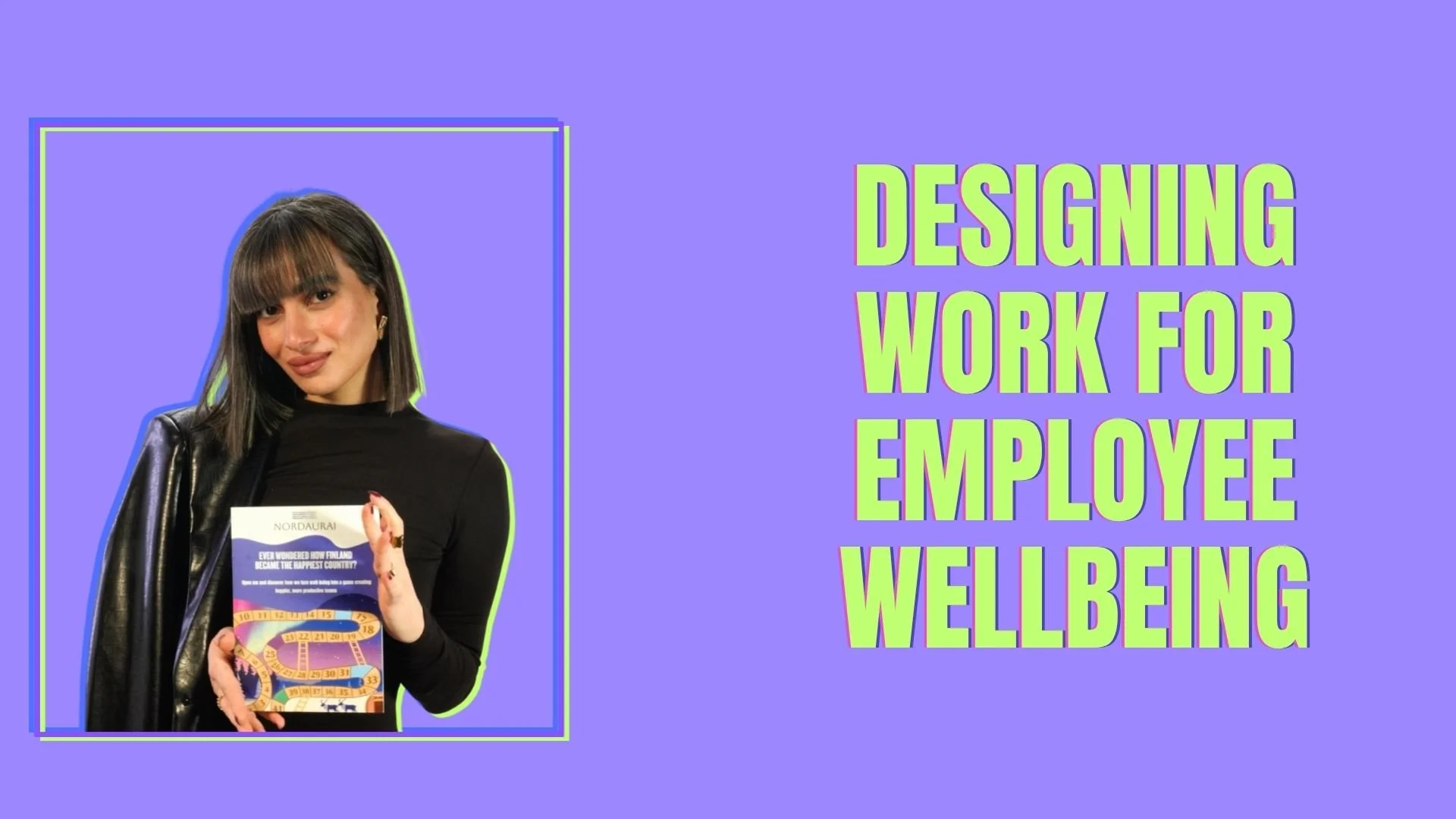
Most companies try to fix burnout after it happens. They roll out a wellness app or an EAP hotline and hope people use it. And most of the time, these tools just become another burden on HR and on the whole team. Here's what designing work with wellbeing in mind actually looks like in practice.
Strength-Based Roles: Designing Work Around Real Capacity
We use the term strength-based roles. You must have heard about it a lot. It sounds simple, however in practice it needs leadership skills. Your leaders and team managers can improve their skills in giving roles and work to their team based on what they're good at, and while doing that, their team will feel motivated.
There's a rule, the +1 rule, when I was studying my bachelor's in teaching, from Chomsky, which means an activity or task must always be one step beyond the student's current skill level, so they learn and also feel motivated. The same logic applies to organizations. The task should be one thing they're very good at, so it brings results for the company, and one +1 thing that will improve their current skills. Remember, human beings crave for learning. By putting all this knowledge into a game, we created Reframe for Strength and Puzzle of Strength, games where leaders can improve their skills in designing roles through play.
Hybrid Work Burnout: Why Boundaries Have to Be Designed
Uhh, this must be one of the most difficult ones. I can't imagine a team member presenting an important report while in the background the baby is crying, or he has to run and turn off the oven. I burned my food once because of this, sounds funny, but it wasn't. I had to spend money and order food, and I looked unprofessional in front of my client. Well, this is life, right? :)
This starts with understanding your roles, a successful person has to understand their different roles in different life contexts, their working styles, and so on. And Mirror Circles is an amazing game for this, for teams to understand their identities in different contexts and learn to set boundaries.
And a clear system where wellbeing sessions, even if remote, require everyone to be there and not self-paced, because even in remote settings we still need team engagement. To keep this healthy balance, our digital games are built around this. Everyone stays active, plays digitally, and does it mindfully.
Engagement, Engagement, and Engagement. Team Engagement Over Another Ignored Wellbeing Tool
You don't need another tool that you pay for and your team including you, doesn't engage with or use. I've come across many team members ignoring the pop-up notifications from their wellbeing provider. So what happens? The wellbeing company gets the money, but people don't use it. We want your investment to be worth it, that's why Nordaurai's approach is games. A game is the best way to bring everyone together and drive behavior change through full engagement.
Designing work for employee wellbeing isn't about adding one more app, one more hotline, or one more self-paced module nobody opens. It's about building strength, boundaries, and engagement into how work actually happens. That's exactly why we built Nordaurai as a game, not a tool. Because people don't burn out from lack of information, they burn out from lack of real support. And play, real, structured, human play, is how we bring that support to life.
Written by:
Wellbeing Specialist & Psychologist
Angela Boyajian Adjounian